
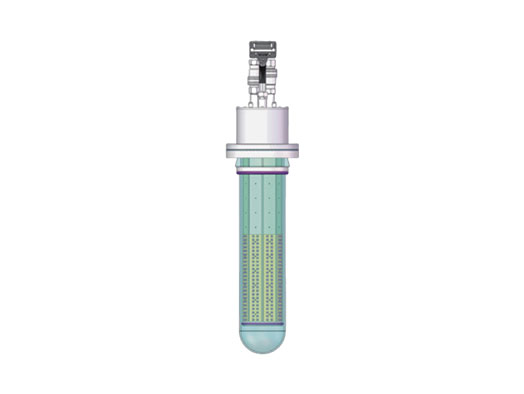
LED photochemical reactor technology is transforming modern photochemistry by delivering precise, energy-efficient, and scalable light-driven reaction control.
As industries continue to adopt cleaner manufacturing methods, LED-based photochemical reactors are becoming increasingly relevant for laboratories, pilot plants, and production environments.
This overview explains the core principles, key benefits, common specifications, typical reactor formats, and practical selection factors for LED photochemical reactors in a clear, SEO-friendly format.
In simple terms, a photochemical reactor uses light to initiate or accelerate chemical reactions. When the light source is based on LED technology, the system can offer better wavelength control, lower heat generation, longer service life, and improved process consistency.
These advantages make LED photochemical reactor systems especially attractive for reactions requiring selective activation, narrow-band irradiation, and stable output over long operating cycles.
An LED photochemical reactor is a reactor designed to expose chemical mixtures to controlled LED light in order to drive photochemical reactions.
The reactor typically includes one or more of the following components: a reaction chamber, LED light modules, temperature control, mixing systems, optical shielding, and safety interlocks.
Depending on the application, the reactor may support batch processing, continuous flow processing, or semi-batch operation.
The core concept behind LED photochemical reactor technology is straightforward: photons emitted by LEDs are absorbed by reactants, catalysts, or photoactive compounds, triggering excited-state pathways that enable chemical transformation.
Because LEDs can emit light at specific wavelengths, they provide a high degree of selectivity compared with broad-spectrum light sources.
The operation of a LED photochemical reactor depends on light absorption, reaction kinetics, mass transfer, and thermal management. In many processes, a photosensitizer or photocatalyst absorbs the LED wavelength and transfers energy or electrons to the substrate. This can initiate oxidation, reduction, bond formation, cleavage, isomerization, or other light-mediated transformations.
LED systems are preferred because they can generate narrow-band light at specific wavelengths such as 365 nm, 385 nm, 405 nm, 450 nm, 520 nm, or other targeted ranges.
This wavelength precision is especially important in photochemistry, where reaction selectivity often depends on matching the emission profile to the absorption spectrum of the catalyst or reactant.
A well-designed LED photochemical reactor also improves photon utilization by positioning the light source close to the reaction zone and using reflective surfaces, transparent flow channels, or optimized reactor geometry to reduce light loss.
As a result, the system can achieve better efficiency and higher reproducibility.
The rise of LED photochemical reactor technology is driven by several important advantages over conventional lamp-based systems. Traditional mercury lamps and other high-intensity discharge sources often produce broad spectra, excess heat, and lower operational flexibility. By contrast, LED-based systems offer a more modern and controllable approach to photochemical processing.
| Feature | LED Photochemical Reactor | Traditional Lamp-Based Reactor |
|---|---|---|
| Wavelength control | High precision, narrow-band output | Broad-spectrum or less selective |
| Heat generation | Lower thermal load | Higher heat output |
| Energy efficiency | Generally higher | Generally lower |
| Maintenance | Lower, longer LED lifetime | Higher, shorter lamp life |
| Start-up time | Instant on/off | May require warm-up |
| Scalability | Strong modular scalability | More limited flexibility |
The main appeal of LED photochemical reactors lies in their ability to combine precision, efficiency, and operational stability.
Below are the most important benefits for industrial users, research laboratories, and process developers.
LED sources can be engineered to emit at highly specific wavelengths, which allows chemists to match the light source to the photophysical requirements of the reaction.
This improves reaction selectivity, minimizes unwanted side reactions, and increases the chance of repeatable results.
Because LEDs convert electrical energy into light more efficiently than many traditional sources, they typically generate less waste heat.
Lower heat load simplifies temperature management, protects heat-sensitive compounds, and supports safer operation.
Energy efficiency is one of the strongest advantages of LED photochemical reactor technology.
Reduced power consumption can lower operating costs, especially in continuous production or long-duration experiments.
LED modules typically offer long operational lifetimes, which reduces replacement frequency and maintenance interruptions.
This is particularly valuable in industrial settings where uptime and process consistency are critical.
LEDs can be turned on and off instantly, allowing operators to control irradiation timing with high accuracy.
This responsiveness is useful for kinetic studies, time-sensitive reactions, and tightly controlled process conditions.
LED arrays can be scaled by adding more light modules or expanding reactor surface area.
This modularity supports smooth movement from laboratory development to pilot-scale and production-scale implementation.
Lower heat generation, reduced mercury concerns, and enclosed reactor designs can contribute to safer operation.
Many LED systems are easier to integrate with modern safety controls and optical shielding.
LED photochemical reactor systems are used across a broad range of industries and research areas.
Their flexibility makes them suitable for both fundamental photochemistry and applied manufacturing.
| Application Area | Typical Use | Why LED Reactors Are Useful |
|---|---|---|
| Organic synthesis | Photocatalytic bond formation and functionalization | Selective wavelength control and reproducibility |
| Pharmaceutical research | Reaction development and process optimization | Precise irradiation and low thermal stress |
| Fine chemicals | Selective transformation of high-value intermediates | Efficient light use and stable output |
| Materials science | Polymerization, surface modification, and curing | Targeted wavelength and controlled exposure |
| Environmental chemistry | Photodegradation and water treatment studies | Energy-efficient irradiation and process control |
| Academic research | Kinetic studies, method development, and screening | Fast switching, repeatability, and flexibility |
There are several common LED photochemical reactor formats, each designed for different volumes, reaction types, and process goals.
Understanding these designs helps users choose the most suitable configuration for their workflow.
Batch reactors are used when the reaction mixture is loaded into a closed chamber and irradiated for a defined period.
These systems are common in laboratories and small-scale process development because they are easy to operate and highly flexible.
Flow reactors continuously pass the reaction mixture through an illuminated zone.
This format can improve heat transfer, enhance light penetration, and support better scalability for continuous manufacturing.
Multi-channel systems allow several reactions or multiple flow streams to be processed in parallel.
They are useful for screening studies, parallel optimization, and higher throughput experimentation.
Stirred tank reactors combine mixing with light irradiation in a single vessel.
Strong agitation can improve uniform exposure and reduce mass-transfer limitations in heterogeneous systems.
Modular panel systems use flat or curved LED arrays surrounding a reaction vessel or flow path.
These designs help maximize light coverage and can be configured for custom geometries.
When evaluating LED photochemical reactor technology, users should review technical specifications carefully.
The right configuration depends on reaction chemistry, throughput requirements, temperature sensitivity, and target scale.
| Specification | Typical Range or Consideration | Why It Matters |
|---|---|---|
| Wavelength | Commonly 365 nm to 520 nm, depending on application | Must match catalyst or substrate absorption |
| Optical power | Varies from low-power lab units to high-power industrial arrays | Influences reaction rate and scale |
| Irradiation area | From small vial zones to large panel surfaces | Determines how much material can be treated |
| Temperature control | Ambient, cooled, or actively regulated | Protects reaction selectivity and stability |
| Mixing method | Magnetic stirring, mechanical agitation, or flow turbulence | Improves homogeneity and light exposure |
| Reactor material | Glass, quartz, PTFE, stainless steel, or specialized polymers | Affects transparency, durability, and compatibility |
| Control system | Manual, digital, programmable, or automated | Supports precision and reproducibility |
| Safety features | Shielding, interlocks, cooling alarms, and overflow protection | Essential for safe operation |
A successful LED photochemical reactor must be designed around optical efficiency, thermal control, and reaction compatibility.
Several engineering factors influence performance.
Light penetration determines how deeply photons can travel into the reaction medium.
If the solution is highly absorbing or turbid, reactor design must compensate with smaller path lengths, stronger mixing, or flow-based exposure.
Geometry affects the distribution of light across the reaction volume.
Thin-film, tubular, annular, and panel-based reactors are all used to optimize the path of LED irradiation.
Even though LEDs produce less heat than many conventional lamps, temperature control is still important.
Efficient cooling systems help maintain stable reaction conditions and prevent thermal decomposition.
Reactor windows or channels must transmit the chosen LED wavelength efficiently.
Materials such as quartz or UV-transparent polymers may be selected based on optical requirements.
In photochemical systems, insufficient mixing can create local irradiation differences and nonuniform reaction rates.
Proper agitation or flow design improves yield and consistency.
The wavelength used in an LED photochemical reactor is one of the most important parameters for process success.
Different wavelengths are suited to different catalysts, substrates, and reaction goals.
| Wavelength Range | Common Use | General Notes |
|---|---|---|
| UV-A (around 365 nm) | Photoinitiation, curing, and UV-sensitive reactions | High energy, requires careful shielding |
| 385–405 nm | Photocatalysis and selected synthetic reactions | Often used in lab and pilot systems |
| 420–450 nm | Visible-light photoredox chemistry | Widely used for catalyst activation |
| 470–490 nm | Blue-light processes and certain organic transformations | Common in many photochemical studies |
| 520–560 nm | Green-light applications | Used when deeper penetration or specific catalysts are required |
To evaluate LED photochemical reactor performance, users should consider not only light intensity but also process efficiency and reproducibility.
Common performance metrics include conversion rate, selectivity, quantum efficiency, residence time, temperature stability, and energy consumption.
| Metric | What It Measures | Why It Is Important |
|---|---|---|
| Conversion | How much starting material is transformed | Basic indicator of reaction success |
| Selectivity | Preference for desired product formation | Critical for purity and yield |
| Quantum yield | Efficiency of photon usage in the reaction | Shows how effectively light is converted into chemistry |
| Residence time | Duration material remains under irradiation | Important in flow and continuous systems |
| Temperature stability | Consistency of thermal conditions during operation | Affects reaction reproducibility |
| Energy consumption | Electrical power required per unit output | Influences operating cost and sustainability |
Compared with mercury lamps, xenon lamps, and other traditional irradiation sources, LED photochemical reactor technology offers several practical improvements.
These improvements are especially relevant for modern process development and clean manufacturing initiatives.
A complete LED photochemical reactor often includes several integrated subsystems that work together to provide controlled photonic exposure.
| Component | Function |
|---|---|
| LED light source | Provides narrow-band irradiation at a selected wavelength |
| Reaction vessel | Contains the liquid, gas, or slurry reaction medium |
| Cooling system | Removes excess heat and stabilizes reaction conditions |
| Stirring or flow system | Promotes uniform exposure and mass transfer |
| Control panel | Manages intensity, timing, temperature, and operating mode |
| Safety enclosure | Protects operators from stray light and process hazards |
The versatility of LED photochemical reactor technology makes it valuable in both research and industrial environments.
In research, it is commonly used for reaction screening, mechanism studies, and method development.
In industry, it supports scalable synthesis, specialty chemical production, and process intensification.
Because the light source can be tuned precisely, LED reactors can support delicate reaction systems that would be difficult to manage with broader-spectrum or hotter light sources.
This is particularly useful for reactions involving sensitive intermediates, photoactive catalysts, or tightly controlled reaction windows.
Choosing the right LED photochemical reactor requires understanding both the chemistry and the process environment.
The following criteria are commonly used when comparing reactor options.
To maximize the benefits of LED photochemical reactor technology, operators should pay attention to a few essential process considerations.
Safety is essential in any LED photochemical reactor environment.
Although LED systems are often safer than older lamp technologies, they still require appropriate shielding, eye protection, thermal monitoring, and operational procedures.
UV-based reactors in particular should be enclosed to prevent accidental exposure.
Good practice includes regular inspection of light modules, verification of cooling performance, proper electrical grounding, and clear operating instructions for users.
In industrial settings, documented procedures and preventive maintenance help preserve both safety and product quality.
The future of LED photochemical reactor technology is closely tied to automation, smart process control, advanced materials, and green chemistry.
As LED efficiency continues to improve, reactors are expected to become even more energy-conscious and application-specific.
Future developments may include better inline monitoring, more advanced wavelength tuning, improved modular scale-up, and tighter integration with continuous manufacturing systems.
These innovations are likely to expand the role of LED reactors in pharmaceuticals, specialty chemicals, materials processing, and sustainable production.
For search engine optimization, it is useful to naturally include key phrases related to the topic.
The following keyword variants are commonly associated with this subject and can help reinforce topical relevance:
LED photochemical reactor technology offers a modern, efficient, and highly controllable approach to light-driven chemistry.
With benefits such as precise wavelength selection, reduced heat output, lower maintenance, and strong scalability, LED systems are increasingly preferred for both laboratory and industrial use.
Whether applied to organic synthesis, photocatalysis, materials processing, or environmental studies, the LED photochemical reactor provides a flexible platform for reliable photochemical performance.
As photochemistry continues to grow in importance, the demand for optimized LED photochemical reactor systems is expected to increase.
For businesses, researchers, and process developers, understanding the fundamentals of reactor design, technical specifications, and application requirements is essential for making informed decisions and achieving consistent results.
AGREGAR:edificio 7, parque industrial Z Acer Z Hi, avenida Lian Tang, ciudad de Shanghu, número de fila C, Jiangsu
Teléfono:0512-65560736 / 0512-65371556
Móvil:+86 13584913897 / +86 13771738377 (Ventas)
Correo electrónico:jkzdhsm@yeah.net
Este sitio web utiliza cookies para garantizar que obtenga la mejor experiencia en nuestro sitio web.
 English
 Pусский
 Deutsch
 日本語
日本語 한국어
한국어 हिन्दी
 Indonesia
 Melayu
 Tiếng Việt



 Whatsapp
 Teléfono
Comentario
(0)