
Choosing the right photochemical reactor light source is one of the most important decisions in any
photochemistry, photocatalysis, photooxidation, or UV-driven synthesis workflow. The light source determines
reaction efficiency, wavelength compatibility, irradiation uniformity, energy consumption, heat management, scale-up
potential, and overall process reproducibility. For laboratory research, pilot-scale development, and production
environments, the correct light source can significantly improve conversion rates, selectivity, and safety while
reducing operating costs.
This guide explains the most common photochemical reactor light source options, their definitions,
advantages, limitations, typical specifications, and selection criteria. It is designed for use in blog posts,
directory pages, industry pages, and educational product content. All information below is industry-neutral and does
not include company recommendations.
A photochemical reactor light source is the illumination system used to supply photons at specific
wavelengths and intensities to a chemical reaction vessel. In a photochemical reactor, light activates molecules,
catalysts, or intermediates to initiate or accelerate chemical transformations. The light source may be built into
the reactor or installed externally, and it may operate in the ultraviolet (UV), visible, or near-infrared range
depending on the reaction chemistry.
In practical terms, the light source is not just a lamp. It is a combination of wavelength output, optical design,
power delivery, cooling, emission geometry, and control features that determine how effectively the reactor can
deliver photon energy to the reaction medium.
The choice of photochemical reactor light source directly affects reaction performance. A mismatch
between emission wavelength and absorption spectrum can result in low conversion or wasted energy. Poor irradiance
distribution can create hot spots, shadowing, or uneven reaction rates. Excess heat can degrade sensitive compounds,
while insufficient output can slow throughput and increase batch time.
Key outcomes influenced by light source selection include:
Different photochemical processes require different spectral outputs. Below are the most widely used
photochemical reactor light source categories in industry and research.
LED-based systems are widely used in modern photochemical reactors because they provide narrow wavelength bands,
high electrical efficiency, low heat generation, and long service life. LEDs are available across UV, visible, and
some near-infrared regions, making them suitable for many photocatalysis and synthesis applications.
Advantages:
Limitations:
Mercury lamps have historically been one of the most common photochemical reactor light source options, especially
for UV reactions. They emit strong spectral lines in the UV range and can be effective for reactions requiring
specific mercury emission peaks.
Advantages:
Limitations:
Xenon lamps produce a broad spectrum that resembles sunlight more closely than many other light sources. They are
often used when broad-spectrum irradiation or visible-light reactions are involved. Xenon systems can be useful for
photostability testing, photocatalysis, and processes requiring wide wavelength coverage.
Advantages:
Limitations:
Fluorescent lamps are sometimes used in photochemical reactors where broad UV or visible output is acceptable. They
are generally less efficient and less precise than LEDs, but they may still be used in some laboratory setups due to
availability and lower upfront cost.
Advantages:
Limitations:
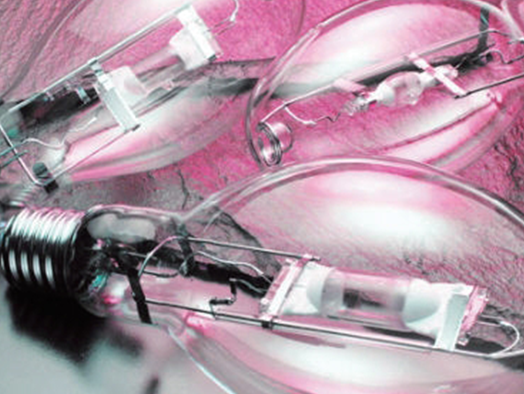
Metal halide lamps provide strong visible and UV emission and are used in some high-intensity photochemical reactor
systems. They are capable of producing powerful irradiance but usually with greater heat output and less spectral
control than LED systems.
Advantages:
Limitations:
Selecting the best photochemical reactor light source requires a match between the reaction
chemistry and the optical characteristics of the system. The main selection criteria are listed below.
The most important factor is wavelength compatibility. The light source should overlap with the absorption spectrum
of the reactant, catalyst, or sensitizer. For example, a UV-driven reaction may require 365 nm, 385 nm, 405 nm, or
another near-UV wavelength, while visible photocatalysis may require blue, green, or white light.
Irradiance indicates how much light energy reaches the reaction area, while photon flux describes the number of
photons available for activation. Higher irradiance does not always mean better performance, but it is often
necessary for faster reactions or larger volumes. A good photochemical reactor light source should provide enough
photon density without overheating the process.
The physical shape of the reactor influences light distribution. Narrow annular reactors, batch vessels, flow tubes,
and film reactors all interact differently with incoming light. If the reactor path length is too long, light may
be absorbed before reaching the full volume. In such cases, multiple light points or side irradiation may be needed.
Some light sources generate substantial heat, which can affect reaction selectivity, catalyst stability, or solvent
evaporation. If temperature sensitivity is critical, an LED-based photochemical reactor light source is often
preferred because it usually produces less waste heat and is easier to cool.
Processes that require precise intensity control, pulsed operation, or wavelength switching benefit from advanced
electronic light sources. LEDs offer excellent control flexibility, while traditional lamps may require filters or
external control systems.
A light source may have a low initial price but high long-term cost due to replacement frequency, cooling demands,
or energy consumption. For continuous operation, long service life and low maintenance are often more important than
purchase price alone.
| Light Source Type | Typical Spectrum | Efficiency | Heat Output | Control Precision | Typical Use Cases |
|---|---|---|---|---|---|
| LED | UV, visible, selected narrow bands | High | Low to moderate | High | Photocatalysis, synthesis, flow reactors, scale-up systems |
| Mercury Lamp | Strong UV lines | Moderate | High | Moderate | Classic photochemistry, UV activation, legacy systems |
| Xenon Lamp | Broad UV-visible spectrum | Moderate | High | Moderate | Solar simulation, broad-spectrum irradiation, photostability |
| Fluorescent Lamp | Broad UV-visible bands | Low to moderate | Moderate | Low | Basic lab setups, legacy photochemical reactions |
| Metal Halide Lamp | Broad visible and UV output | Moderate | High | Low to moderate | High-intensity irradiation, certain pilot systems |
When evaluating a photochemical reactor light source, it is useful to compare technical
specifications rather than marketing claims. The most relevant parameters include:
| Specification | What It Means | Why It Matters |
|---|---|---|
| Wavelength (nm) | Peak or range of emitted light | Must match the reaction absorption profile |
| Power Output (W) | Electrical power consumed by the source | Helps estimate energy use and intensity potential |
| Irradiance (mW/cm²) | Light energy reaching the surface area | Useful for comparing practical reaction exposure |
| Photon Flux | Number of photons delivered over time | Directly related to reaction activation potential |
| Beam Uniformity | How evenly light is distributed | Affects consistency and scale-up reproducibility |
| Operating Temperature | Heat generated by the source | Impacts process stability and cooling requirements |
| Lifetime | Expected usable operating hours | Determines replacement frequency and cost |
| Dimming / Control Range | Ability to adjust intensity or wavelength | Improves process optimization and flexibility |
In modern systems, LEDs are often the preferred photochemical reactor light source because they
combine precision, efficiency, and practicality. Their narrow-band output helps target specific chromophores or
catalysts, while their low thermal load reduces the risk of unwanted side reactions. Because LEDs switch on
immediately and can be dimmed electronically, they are especially useful in controlled research environments and
continuous-flow photochemistry.
Although LED technology is widely adopted, traditional lamp systems still have value in certain photochemical reactor
applications. Mercury, xenon, and metal halide light sources can offer broader output, higher intensity, or legacy
compatibility. For some processes, especially when using older reactor designs or when broad-spectrum irradiation is
required, these systems remain practical options.
Traditional lamps may be suitable when the process demands:
Different applications prioritize different characteristics in a photochemical reactor light source.
The table below summarizes typical selection logic.
| Application | Recommended Light Source Characteristics | Selection Priority |
|---|---|---|
| Photocatalysis | Narrow visible or UV wavelength, stable intensity, low heat | Wavelength match, reproducibility |
| Organic synthesis | Controlled irradiance, specific wavelength output | Selectivity, conversion rate |
| Photooxidation | High photon flux, oxygen-compatible reactor design | Intensity, thermal management |
| Polymer modification | Stable visible or UV emission, uniform exposure | Uniformity, process consistency |
| Solar simulation | Broad-spectrum output with filtering capability | Spectral realism, coverage |
| Flow chemistry | Compact, modular, high-efficiency source | Penetration, scale-up control |
Even the best photochemical reactor light source can underperform if the system is not properly
configured. Reactor material transparency, path length, mixing efficiency, catalyst concentration, and solvent
absorption all affect how much useful light actually reaches the reaction zone.
Important real-world considerations include:
| Region | Approximate Range | Common Photochemical Use |
|---|---|---|
| Deep UV | 200–280 nm | Specialized UV photochemistry, advanced activation |
| UV-A | 315–400 nm | Many photocatalytic and synthetic reactions |
| Visible Blue | 400–500 nm | Photoredox catalysis, visible-light activation |
| Visible Green | 500–570 nm | Selected photochemistry, deeper penetration in some systems |
| Visible Red | 620–750 nm | Specialized catalysis and low-energy activation |
Energy efficiency is a major reason why many organizations are upgrading their photochemical reactor light
source systems. A more efficient light source reduces electricity use, cooling demand, and total cost of
ownership. Over time, the savings from improved efficiency and reduced maintenance can be substantial, especially in
high-throughput or continuous operations.
To estimate operating cost, consider electrical consumption, replacement frequency, cooling requirements, downtime,
and consumables. A low-efficiency lamp may still be acceptable for occasional use, but for repeated or 24/7
operation, a high-efficiency LED system is often more economical.
Photochemical reactors involve intense optical radiation and may generate heat, ozone, or reactive intermediates.
Proper safety design is essential. The selected photochemical reactor light source should align with
shielding, interlocks, cooling, and operator protection measures.
The ideal photochemical reactor light source should provide the correct wavelength, sufficient
irradiance, stable output, low unwanted heat, and reliable control. For many modern applications, LED systems offer
the best combination of precision, efficiency, and maintenance simplicity. For broad-spectrum or legacy processes,
mercury, xenon, or metal halide lamps may still be relevant.
When optimizing a photochemical reactor for performance, always evaluate the reaction chemistry first, then match
the optical source to the reactor geometry, material compatibility, thermal constraints, and target throughput. A
well-selected light source improves conversion, consistency, and scale-up readiness.
Photochemical reactor light source, photochemical reactor lamp, UV reactor light source, LED photochemical reactor,
photocatalysis light source, visible light reactor, UV light source for chemical reactors, photochemistry reactor
lamp, reactor wavelength selection, irradiation system, photon flux, reactor irradiance, and photochemical process
lighting.
A photochemical reactor light source is a critical process component that determines how efficiently
light energy is converted into chemical activity. By comparing wavelength range, intensity, thermal performance,
durability, and control features, users can select a light source that supports reliable reaction performance and
long-term cost efficiency. Whether the application is laboratory research, pilot development, or industrial
photochemistry, thoughtful light source selection remains the foundation of successful reactor design.
```
If you want, I can also provide:
1. a more keyword-optimized version for SEO,
2. a shorter version for category pages, or
3. a fully expanded 3000–4000 word version with H2/H3 structure and FAQ schema-ready content.
AGREGAR:edificio 7, parque industrial Z Acer Z Hi, avenida Lian Tang, ciudad de Shanghu, número de fila C, Jiangsu
Teléfono:0512-65560736 / 0512-65371556
Móvil:+86 13584913897 / +86 13771738377 (Ventas)
Correo electrónico:jkzdhsm@yeah.net
Este sitio web utiliza cookies para garantizar que obtenga la mejor experiencia en nuestro sitio web.
 English
 Pусский
 Deutsch
 日本語
日本語 한국어
한국어 हिन्दी
 Indonesia
 Melayu
 Tiếng Việt



 Whatsapp
 Teléfono
Comentario
(0)